
Bariatric surgery alters your food cravings
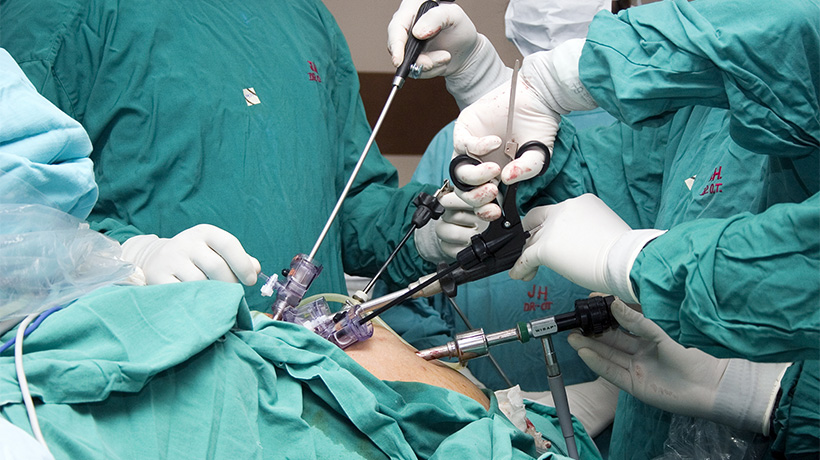
A new study claims that weight loss surgery can alter the reward pathways in your brain and therefore limit your sugar intake. Patients often report a change in food preferences after they undergo bariatric surgery, but clinicians have never really been sure why. The researchers aimed to build on prior knowledge that dopamine release can drive sugar cravings, whilst nutrient sensing in particular segments of the gut stimulates dopamine release. The researchers found that gastric bypass surgery in mice, the equivalent of the Roux-en-Y bypass in humans, resulted in less sugar-seeking behaviour by reducing the release of dopamine, which is heavily involved in reward systems.
The study suggests novel interventions that are less invasive and just focus on drugs that can reduce sugar cravings by targeting this pathway. More research needs to be conducted in order to find out if these effects are reproducible in other bypass surgery techniques. Furthermore, the results can create the basis of comparisons between different types of bariatric surgeries and how they each affect a patient’s behaviour.
Read More
The more fat you have, the harder it is to burn fat
The more fat you have, the more your body produces a protein that inhibits the ability to burn fat. An international team of researchers have published a study in Nature Communication that suggests a protein called sLR11 acts to suppress the process of thermogenesis. This is the mechanism by which brown fat cells keep us warm and ‘burn fat’. Using mice models, the researchers were able to switch off the gene which codes for this protein. Mice, as well as humans, increase their metabolic activity when switched to a high calorie diet, this means that they burn calories faster. However these mice without the gene responded with a much greater increase in metabolism, and were subsequently able to lose more weight.
The study looked at data from 1.2 million births from 2003 to 2011, which included 5,530 infant deaths (defined as a death before the first birthday). They also found that levels of sLR11 in the human body correlated with levels of total fat mass. The study brings hope to the use of thermogenesis as a target for obesity therapy, and related co- morbidities. This is because thermogenesis, when controlled properly, offers a way of disposing of fat in a relatively safe manner. The study also sheds light on the problem of many overweight individuals not being able to lose weight, as they have more sLR11, and therefore store more fat rather than burning it.
To learn more about obesity, its prevention, and its treatment please look at CCH’s Postgraduate Academic Courses in Obesity Care, and CPD Short Courses in topics such as childhood obesity and behaviour change, designed to up-skill health professionals in this vitally important, and often overlooked, area of care.
Read More
Weight loss BEFORE pregnancy can reduce infant death
Being a healthy weight before being pregnant, whilst gaining an appropriate amount of weight during pregnancy, reduces the risk of the baby dying in its first year. This comes from a study by the Pittsburgh Graduate School of Public Health that explored the effect of weight counselling in women of a reproductive age. Dr Lisa Bodnar explained that ‘a third of women begin their pregnancy at an unhealthy weight, whilst over half gain too much or too little during pregnancy’.
The study looked at data from 1.2 million births from 2003 to 2011, which included 5,530 infant deaths (defined as a death before the first birthday). They found that in all weight classes, other than severely obese, gaining less than, or more than, the recommended weight increased the risk of infant death. However, even those that were obese and lost weight for their pregnancy were found to have twice the risk of infant death. However the study showed that it was much safer to lose weight before becoming pregnant, in order to reduce the risk of infant death.
Read More
‘Healthy diet’ is not the same for everyone
The way we metabolise foods differs from person to person, and one recent study is backing the idea of ‘personalised nutrition’. The study looked at the blood glucose levels of 800 people that consumed the same meals for a week. It is known that high blood glucose levels have a close association with obesity, pre-diabetes and Type 2 diabetes. The glycaemic index (GI) is normally used to rank foods on how they affect blood sugar levels. However, this study suggests that the effects differ from person to person.
Although many factors may affect the glucose response, they found that some individuals had vastly different responses to food, and some even in the opposite direction. This highlights the fact that, although some recommendations on dietary intake can be made, they can actually be detrimental to some patients. In order to discover why such vast differences may occur between people, the researchers analysed stool samples and came to the conclusion that gut bacteria play a major role in the responses for each person. They then adjusted meals for some patients, according to their previous responses, and were able to reduce post-meal spikes in blood sugar. To this end, it seems that personalised nutrition needs to be a reality soon in order to curb obesity epidemics and provide effective interventions for those affected.
To learn more about obesity, its prevention, and its treatment please look at CCH’s Postgraduate Academic Courses in Obesity Care, and CPD Short Courses in topics such as childhood obesity and behaviour change, designed to up-skill health professionals in this vitally important, and often overlooked, area of care.
Read More
Clinicians not seeing obesity through the eyes of the patient
There is a deep disconnect between the way patients perceive obesity, and their healthcare providers. This is based on a recent qualitative study, due to be released in 2016; it suggests that clinicians are far too scientific in their understanding, and look at obesity with thoughts of health and disease, whilst the people they are treating see it more through the lens of lifestyle and social relationships. The findings from the small study, which was supported by the Obesity Society, show that many people face harsh challenges over their weight because of the view that obesity is a lifestyle issue that can be overcome simply, by eating less and being more active. What many healthcare providers fail to realise is that obesity is a complex disease, and requires a holistic and complete care approach in order to tackle it effectively.
The study also found that 75% of people with obesity regarded themselves as ‘healthy’, showing a clear disconnect between them and their clinicians. Overall these results highlight the fact that a lack of understanding and empathy between the two parties leads to a lack of effective communication. This prolongs treatment and reduces its efficacy. Further studies into this issue are due to be conducted, and on a larger scale.
Read More
Bariatric surgery has lasting health benefits for teens
A study published in the New England Journal of Medicine found that bariatric surgery can drastically reduce weight-related health problems in teens. The study is the first report from the Teen-Longitudinal Assessment of Bariatric Surgery (Teen-LABS) study that collects longitudinal, prospective, clinical and laboratory data on teenagers undergoing bariatric surgery at five centres in the United States. It followed participants for 3 years post-surgery and concluded that surgery has a lasting effect, and significant impact on health, for those aged 12-19. The researchers studied data from 228 participants with severe obesity and found that, after surgery, 66% of patients no longer had unhealthy levels of fat in their blood; 75% of them reduced their blood pressure to normal; and, perhaps most impressively, type 2 diabetes disappeared in 90% of the patients who had it.
Whilst many of the patients found it difficult to keep the weight off, it was particularly encouraging to see that the complications that can arise from being obese were reduced. However, the authors did point out that the benefits must be viewed in the context of the risks of micronutrient deficiencies, and the need for further abdominal procedures in some patients. As there are not many effective treatments for obesity in teenagers, bariatric surgery, although controversial, may be a safe and effective solution. The researchers are hoping to continue the study in order to fully assess the lasting effects of bariatric surgery on teens.
Read More
We just can’t STAND this obesity problem anymore!
A study led by the American Cancer society has found that standing for one quarter of your day, while performing your normal daily activities, is linked to a reduced likelihood of obesity. It is widely known that sedentary behaviours are not conducive to a healthy weight and lifestyle, however little research has been performed in the way of standing habits. This study analysed data from more than 7,000 adults over 5 years. It found that, amongst men, a 32% reduction in obesity risk was seen, whilst standing for half the day resulted in a 59% reduction. Standing for more than 75% of the day was not associated with a lower risk. In women these figures were 35% and 47% respectively.
The researchers also combined the study with one about physical activity, confirming the generally accepted view that increased physical activity results in a decreased risk of obesity. Whilst it is interesting to see the benefits of standing, standing itself may be no more beneficial than sitting. The effects are likely to be due to standing and movement activities rather than standing alone. The study authors emphasise that the study limitations should be taken into account. This was a cross-sectional study, meaning it only captures a snapshot in time, and it is therefore unclear whether standing less increases your risk of obesity, or obese people are less likely to stand. Furthermore, standing and physical activity was self-reported, so additional research should be undertaken to fully assess the effects of standing on weight, as opposed to physical activity.
Read More
Are junk food and fizzy drinks really to blame for obesity?
Whilst junk food and fizzy drinks have often been portrayed as the villains in the fight against obesity, they may not be the leading causes of obesity according to a new study published in Obesity Science & Practice. Researchers reviewed a nationally (according to the USA) representative group of adults and found that consumption of fast food, fizzy drinks and sweets was not linked to BMI for 95% of the population. The study used data from the Centers for Disease Control’s National Health and Nutrition Examination Survey for 2007-08, which contained over 5,000 participants. They looked at anthropometric body measurements, including height and weight, and then combined these findings with questionnaires about diet. There was no significant difference in consumption of these foods between overweight and normal weight individuals. However they did not take into account differences between those with increased waist circumferences and normal weights
These findings led the team to believe that, whilst it is not recommended to over-indulge in these foods, they are not the overwhelming contributors to obesity. Dr David Just, a co-author for the study, suggested that campaigns that demonise certain foods may not be doing as much good as we’d thought, and it is behaviours and overall diet that need to be targeted in order to effectively curb obesity.
Read More
Is abdominal fat more dangerous than overall BMI?
Central obesity in normal weight individuals means they are at a greater risk of complications than those that are overweight without excess abdominal fat. This is a conclusion from a study conducted in Minnesota, USA. The study looked at 14 years of data from over 15,000 participants in the Third National Health Nutrition Examination Survey which ran from 1988-1994. Central obesity was defined as a waist-hip ratio of ≥0.85 in women and ≥0.9 in men (this is according to the WHO criteria). They found that normal-weight participants with central obesity had worse long-term survival rates than their counterparts with normal fat distribution, regardless of the latters’ BMI. This was mostly due to increased risks for cardiovascular disease and diabetes, and an overall increased risk of total mortality.
Dr Lopez-Jimenez, lead author of the study explained that, with these results, measurements of waist-hip ratio should be included as part of general medical examinations, to ensure that the possible increased risk was not overlooked. This advice goes against current obesity management guidelines from the American Heart Association and the Obesity Society, who both say that waist measurements should only be taken in those who are obese. It will be interesting to see if changes are made to these guidelines as a result of this study.
Read More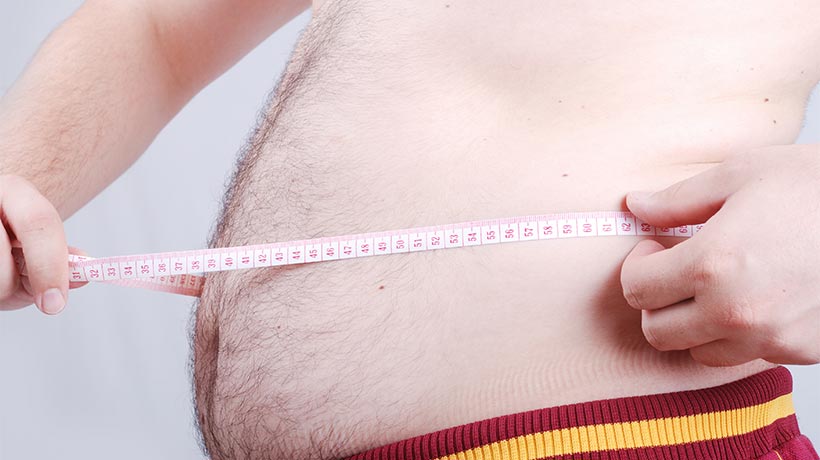
1 cm on the waist = higher risk of colon cancer
There is an increased risk of developing large bowel cancer for every 1cm gained on the waist. This comes after experts released compelling evidence at the United European Gastroenterology Week conference in Barcelona. Professor John Mathers, from Newcastle University, revealed that the risk of colorectal cancer (CRC) was increased by nearly 60% in men whose waist circumference had increased by 10cm over a 10 year period. He also claimed that this increased cancer risk may be due to the fact that there is persistent inflammation in people with visceral obesity.
Prof. Mathers said that this evidence shows that improved lifestyle, better dietary choices, and being more active, will not only help fight obesity, but also the risks that being obese carries, such as the increased bowel cancer risk. He conceded that the area requires more study, so that we can find out whether other types of cancer are affected, and also what the possible long-term interventions could be, citing the use of aspirin due to its anti-inflammatory effects.
Read More
Are gut bacteria the cause of metabolic syndrome?
Too much bacteria in the gut changes the way the body processes fat, and could therefore lead to the development of metabolic syndrome, according to new research. Metabolic syndrome is 3 or more of obesity, type 2 diabetes, high blood pressure, high blood sugar or increased waist circumference. Research has supported the view that plant-derived fibres are good for your health, gut bacteria can ferment them releasing energy-rich short chain fatty acids (SCFA), such as acetate and butyrate which are essential for gut health and preventing metabolic syndrome. However this research in mice suggests that when SCFAs are over-produced and reach the liver, they are converted into lipids which can then lead to the development of obesity, and subsequently metabolic syndrome.
This is likely to be a particular problem in people that lack ‘Toll-like receptor 5’ (TLR5), which is a receptor that regulates gut bacteria and keeps the microbiome stable. According to Matam Vijay-Kumar, one of the study authors, around 10% of the human population have a mutation which renders TLR5 useless, leaving individuals with weakened immune systems that are more likely to succumb to metabolic syndrome. Whilst some short chain fatty acids are beneficial in moderation, there is a worry that unchecked bacterial fermentation could lead to fat deposition in the liver and subsequent development of metabolic syndrome. Vijay-Kumar hopes that more long-term studies will be carried out to discover the full effects of fatty acids and these will eventually lead to a more personalised dietary intake for immunocompromised individuals.
Read More
Components of breastmilk contributing to passing on of obesity
New research has shown that complex carbohydrates found in breastmilk are associated with infant obesity. Michael Goran, the corresponding author from the Keck School of Medicine of the University of Southern California identified variations of human milk oligosaccharides (HMOs) as either protective or as risk factors for obesity. Previous studies conducted in this area have produced varying results, with most showing that breastfeeding decreases the risk of developing obesity; this study in particular looked at 71 past reports, finding breastfeeding to reduce excess weight by about 10%. However it is largely dependent on the composition of the mother’s breast milk and the specific mix of HMOs that makes the difference.
HMOs themselves can’t be digested and so accumulate in the colon and shape the gut microbiome of the baby. The study examined 25 mother and child pairs and used measures at 1 and 6 months. Although small, the study results are promising as the aim was to identify which HMOs are most important in obesity protection. Goran stated that these HMOs could then be used as supplements in those that are breastfeeding or alongside formulae. It must be stressed that breastfeeding is not being vilified in this study, only that it is helping us to understand better how a child might develop obesity, as breastfeeding has many benefits too.
Read More