

Gene variant can influence food choices
A research team from McGill university have recently found that the interplay of children’s socioeconomic environment will have a large impact on girls that carry a particular gene variant (DRD4 VNTR with 7 repeats). Their socioeconomic environment can lead to healthy eating, or it can lead to an unhealthy diet. The gene variant itself is known to be present in up to 20% of the population, making it extremely common. It is also known to be associated with obesity. The researchers found that in girls from a poorer background, in those that carried the variant, they consumed higher fat diets. They found a healthier diet was consumed in girls from a wealthier background in those that were also carriers of the gene variant. Interestingly, boys who also had the same gene variant were not affected in the same way.
The research backs the idea that obesity is not caused by individual factors working separately; rather obesity is the result of a broad interplay of factors, many of which can also lead to a healthier lifestyle, if expressed correctly. The researchers hope to use this information in order to better understand the role that genes play in the development of obesity, and therefore develop increasingly efficient interventions against the epidemic.
Read More
The secret to losing fat and gaining muscle
Researchers at McMaster University in Canada have found that it is possible to gain muscle whilst losing fat, the ideal aim for many. The researchers admit that the method is not an easy one! 40 young men underwent a regimen of hard exercise, whilst cutting the amount of dietary energy they would normally consume by 40%. After splitting the group into two (where one was given more protein than the other), they found that the protein group were able to gain muscle, and at the same time lose excess fat.
The researchers are keen to point out that the regimen will not work for everyone as it was designed for a particular group of young men. The regimen itself is not for those looking for a ‘quick fix’ but more for those who are committed to spending time and effort in order to get back into shape and to control their diets whilst undertaking supervised exercise. The authors are hoping to continue this research in young women, and also develop a programme that will be ‘a little easier and much more sustainable’.
Read More
Does obesity affect your memory?
Researchers at the University of Alabama may have found a connection between declining memory and obesity. They identified particular genes in the hippocampus area of the brains of mice and found that, in obese mice, there is a dysregulation of memory-associated genes due to epigenetic changes, assumed to be caused by obesity. These particular genes are supposed to help neurones in the brain create new synapses, which are involved with memory formation.
This is one of the first studies that actually looks into the mechanisms of epigenetic dysregulation of memory-associated genes. The authors explained that the study itself may serve as a conceptual basis for the development of therapeutic interventions for obesity-induced memory impairment, due to the discovery of the link between diet, epigenetics and cognitive function. However they do say that much deeper research and assessment into the area is needed before therapeutic interventions are considered.
Read More
Can maternal obesity increase autism risk in children?
Children of obese women with diabetes are more than 4 times more likely to suffer from an autism spectrum disorder. These are the findings from a study conducted at the Johns Hopkins School of Public Health in Baltimore, USA. The researchers analysed 2,734 mother-child pairs for the study, between 1998 and 2014. By collecting data on maternal weight and diabetes status, and comparing this with prevalence of autism in the children, they were able to conclude that children whose mothers were both diabetic and obese were 4 times more likely to have an autism spectrum disorder than their healthier mother-child counterparts.
The research highlights that the risk of autism begins in utero, and the authors are now keen to figure out the mechanisms behind the development of autism in these children. Previous studies have made a link between maternal diabetes and autism, however this is the first that looks at the combination of diabetes and obesity. The researchers wanted to make women of child-bearing age aware of these risks and the implications that it could have on their children. However, they do concede that more needs to be done in order to fully understand the process.
Read More
Brain function is different in obese children
Researchers at the Vanderbilt University Medical Center have found that the brains of obese children function differently from the brains of those children of a healthy weight. The study included 38 children, some of whom were overweight or obese, and, through the use of questionnaires and MRI techniques, they found a profound difference in the food-seeking behaviours of obese children. Using previous knowledge about different areas of the brain being involved in certain behaviours, the researchers were able to map out the effect of obesity on the brain, finding that unhealthy eating behaviours reflected an imbalance in the functional connectivity of the brain towards impulsivity.
The study authors hope that their findings could highlight the use of mindfulness, a technique used to focus awareness, as a therapeutic target for obese children by reducing the effect of this imbalance on the brain, and possibly helping control it. By bringing balance in the brain, mindfulness could help to reduce impulsivity, and by encouraging children to eat healthily, there is a hope that their weight would decrease. Furthermore, they highlighted the fact that childhood obesity needs early identification in order to effectively treat and prevent it.
Read More
Are organic pollutants causing abdominal obesity?
Organic pollutants may be causing hormone imbalances that contribute to the development of obesity. This is the outcome of a new study, from Taiwan published in the journal PLOS ONE. Researchers were examining the relationship between abdominal obesity, insulin resistance and dioxin, known as a persistent organic pollutant (POP). Rodent studies have shown that dioxin-like organic pollutants may be obesogens. The researchers analysed the data of 2,876 participants and found that those with higher levels of dioxin in their systems from eating contaminated seafood were fatter and more likely to suffer from insulin resistance.
Dioxins are released into the air by a range of industrial processes, some of which are also found in motor vehicles. Recently, more research has been undertaken into the health harms related to these particles, in particular on the endocrine related effects. The researchers hope that this study will help highlight the problem of POPs and will therefore lead to the reduction in exposure to these endocrine disrupting chemicals.
Read More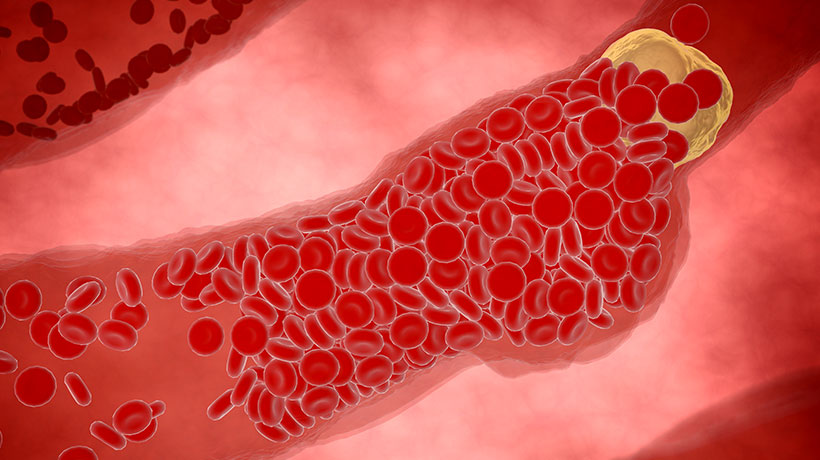
Obesity linked with blood clots in children
A recent study has found that obesity can contribute to the formation of venous thromboembolism (VTE) in children. It is a well-established fact that obesity can cause VTE in adults, however this study found that a high BMI is also a risk factor in children. The study was conducted on 88 patients from 2 to 18 years of age. The authors were particularly concerned as the incidence of paediatric VTE has increased over the last 20 years, along with the rise in childhood obesity.
Even though the data is from a single institution, and the sample size is fairly small, it still suggests that there is an association between paediatric VTE and obesity being demonstrated. Clinicians need to be aware of this association, as it has the potential to result in many more health issues for the children such as recurrent clots, pulmonary embolism (a severe condition where blood flow is restricted to the lungs), post-thrombotic syndrome (which is a painful condition affecting limbs that causes ulceration), or even stroke.
Read More
Listening to your body to stop obesity
To be able to cope with stress more effectively, we should listen to our bodies more. This is the conclusion of a study conducted in San Diego, California where researchers evaluated brain function before and after a stressful situation using functional MRI. They found that people with high resilience were far more attentive to signals that their body were giving them (such as changes in breathing and heart rates) and were therefore able to moderate this response, effectively dampening the effect of stress.
As the stress response can play a role in the development of obesity, due to its proven effects on hormone regulation and cravings (sometimes referred to as ‘comfort eating’), this research has the potential to investigate the causes of obesity in some individuals, possibly creating opportunities for new interventions to be developed. The researchers are hoping to build on this work and explore the effect of resilience more, so that it may be used in a therapeutic setting.
Read More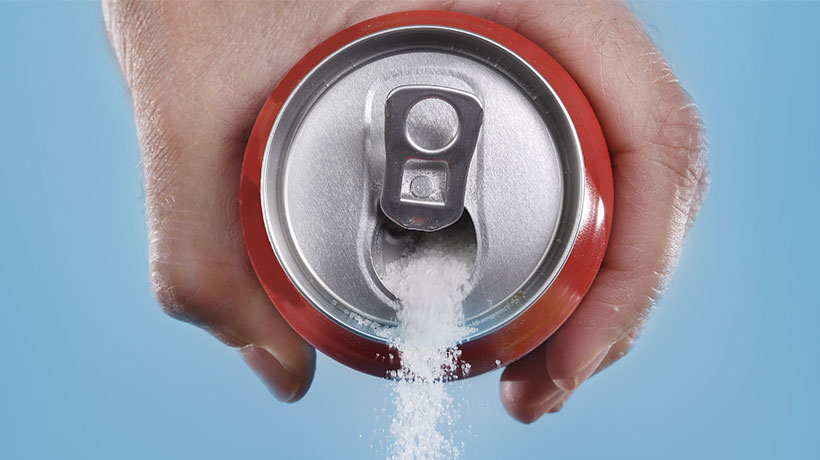
Do sugar-sweetened drinks increase visceral fat?
Consuming sugar-sweetened beverages may increase the amount of visceral fat that your body stores. This is the outcome of a study published in the American Heart Association’s journal Circulation. As these drinks are the largest contributor of added sugar intake in the USA, researchers looked at data from just over 1,000 patients in the Framingham Heart Study (an ongoing project into cardiovascular disease). The participants were given CT scans at the start of the study, and after a 6-year follow-up the researchers observed that there was a direct correlation between increased sugar-sweetened drink consumption and increased visceral fat.
Visceral fat is fat that covers internal organs and has been linked with the development of diabetes and heart disease due to its impact on inflammation and release of adipokines. The exact mechanism in this study is not fully known, however the authors hypothesised that the added sugars in the drinks could contribute to insulin resistance as well, eventually leading to type 2 diabetes, whilst also promoting fat accumulation in visceral tissues. There was no association for diet soda. The study supports the current dietary recommendations of limiting the number of sugar-sweetened beverages that one consumes, to protect against cardiometabolic diseases.
Read More
Water jets fight childhood obesity
The installation of water dispensers in schools is associated with a decreased weight of students. A recent study conducted across 1,227 elementary and middle schools (ages 4-13), including 1,065,562 students in New York City, found that this relatively low-cost intervention has the potential to have great health effects on the children. In 2009, New York City’s Department of Health and Mental Hygiene and Department of Education collaborated to introduce ‘water jets’ into schools. The aim of which was to decrease the volume of high calorie beverages that the children consume and promote water consumption, thereby becoming an intervention against childhood obesity.
The researchers compared the BMI of students before and after the introduction of the water jets and found that, after a 3-month period, BMI in both boys and girls was slightly, but significantly, lowered. The authors hypothesised that the availability of water meant that fewer students would bring in high calorie beverages that may contribute to weight problems. Just under 40% of the children in New York City are classed as being overweight or obese so the city has adopted policies that aim to reduce this number. This intervention could offer a cheap and effective avenue for these policies. However, the researchers do admit that more research will need to be done in order to discover the mechanism behind the effect, although in their study they showed less milk was purchased.
Picture from Healthnewsline
Read More
Losing weight early enough can avoid diabetes
Humans have subconscious urges to eat more during the winter months, whilst also limiting their ability to avoid obesity. This is the conclusion from a study originating at the University of Exeter. The study authors were aiming to understand how evolutionary processes shape the mechanisms that control body weight. Using mathematical models, the researchers explored how much fat animals can and should store, taking food availability and predatory risk into account. They found that there is a possible urge to maintain a higher body weight during winter. This is due to the fact that in the natural world, food is much scarcer during these months.
The study’s lead author, Dr Andrew Higginson explained that all animals, including humans, should show seasonal effects on the urge to gain weight. He further explained that pre-industrial humans would have stored fat, as an insurance in case they could not find food, and this is a trait that we may have taken with us into the present day. The study as a whole hopes to make it easier for models to predict the future behaviours of humans that may impact on control mechanisms for obesity.
Read More
Humans have evolved to eat more over winter
Humans have subconscious urges to eat more during the winter months, whilst also limiting their ability to avoid obesity. This is the conclusion from a study originating at the University of Exeter. The study authors were aiming to understand how evolutionary processes shape the mechanisms that control body weight. Using mathematical models, the researchers explored how much fat animals can and should store, taking food availability and predatory risk into account. They found that there is a possible urge to maintain a higher body weight during winter. This is due to the fact that in the natural world, food is much scarcer during these months.
The study’s lead author, Dr Andrew Higginson explained that all animals, including humans, should show seasonal effects on the urge to gain weight. He further explained that pre-industrial humans would have stored fat, as an insurance in case they could not find food, and this is a trait that we may have taken with us into the present day. The study as a whole hopes to make it easier for models to predict the future behaviours of humans that may impact on control mechanisms for obesity.
Read More